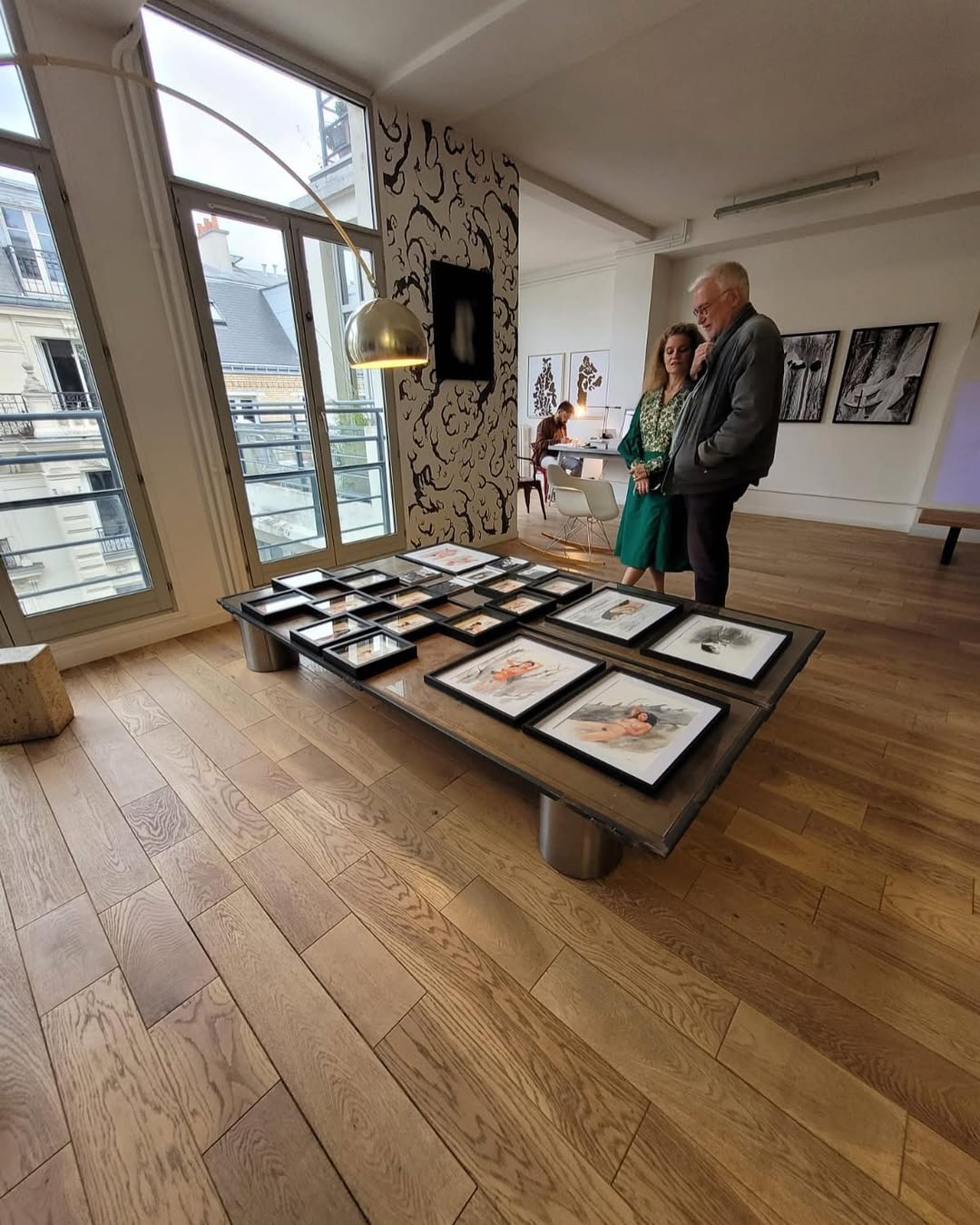

I at Gallery Rachel Hardoun, Paris, France

TALES OF
INDIA
India's mythological and literary traditions have long embraced the complexities of human desire, sexuality and the body with remarkable openness. Long before sexuality became a subject of moral anxiety in many parts of the world, Indian epics, Puranas, classical poetry and temple sculptures acknowledged eroticism as an integral part of life rather than as something hidden or forbidden. Desire was understood not merely as physical attraction but as one of the fundamental forces that shaped creation, relationships, morality and human experience. Within this cultural imagination, the body was never separated from philosophy, spirituality or society; instead, it became a site where questions of identity, love, power and freedom could be explored.
The Mahabharata, perhaps the most expansive narrative in Indian literature, offers numerous examples of this openness. Women are not simply passive participants in the epic but articulate individuals who question authority, negotiate their own identities and speak openly about justice, love and autonomy. Shakuntala, in her dialogue with King Dushyanta, asserts her dignity and demands recognition, while Draupadi repeatedly challenges patriarchal authority through her uncompromising questions on law, honour and the rights of women. Their voices reveal a literary culture in which women were not merely subjects of desire but thinkers and moral agents capable of confronting kings, elders and social conventions.
Indian mythology also presents the human body as a dynamic and transformative presence. Stories of changing genders, multiple marriages, divine unions, ascetic renunciation and erotic devotion demonstrate that identity was often imagined as fluid rather than fixed. Love, longing and sexuality were explored alongside devotion, ethics and cosmology, creating narratives that resisted rigid binaries between the sacred and the sensual. The body became a language through which philosophical ideas could be expressed, reminding us that human experience cannot be understood by separating desire from culture or spirituality.


In Tales of India, Sankha Banerjee revisits these forgotten conversations through a contemporary visual language. Rather than illustrating mythology as a collection of familiar legends, the exhibition investigates the ways in which ancient narratives continue to speak to present-day questions about sexuality, gender, intimacy and personal freedom. Through drawing, sequential imagery and visual storytelling, Banerjee uncovers episodes that reveal the richness and plurality of Indian thought, encouraging viewers to look beyond simplified or moralistic readings of the past.
The exhibition does not seek to sensationalise sexuality; instead, it reclaims it as a significant cultural and intellectual discourse that has existed within Indian traditions for centuries. By bringing together mythology, literature and contemporary artistic practice, Tales of India reminds us that the history of the Indian imagination is far more diverse, nuanced and fearless than modern stereotypes often suggest. It invites audiences to rediscover a heritage in which the body was not merely represented, but understood as central to the human search for love, identity, knowledge and liberation.


SANKHA BANERJEE
